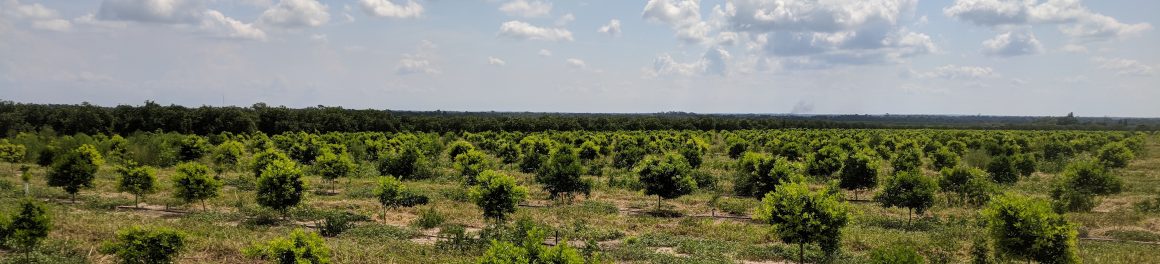
What do citrus trees look like after 2 years of coverage with white and red-dyed kaolin? See for yourself!
Next week week have a presentation of actual data of results with growth, insect populations, and HLB infection status.
What do citrus trees look like after 2 years of coverage with white and red-dyed kaolin? See for yourself!
Next week week have a presentation of actual data of results with growth, insect populations, and HLB infection status.
There has been discussion lately about how effective are antibiotics in citrus groves. In order for these to take down Las, the bacterium that causes greening, they need to be moved in the vascular system, particularly the phloem, where Las hangs out. So, are leaf-sprayed antibiotics moved systemically?
This is the question some colleagues and I asked in a recent paper. We were following up on some of Nian Wang’s research that showed how trunk-injected oxy-tetracycline (which we’ll affectionately call “oxytet”) moved around the citrus plant, eventually reaching all parts. We had a few questions:
In the same study we looked at some of the effects of heat treatment, but today we’ll just look at oxytet delivery. These trees did not have HLB, this is because we wanted to look at oxytet movement, not efficacy against Las.
Some plants we removed all new flush, some we removed all old flush, and some we left all the leaves. We covered about 1/4 of the canopy of small trees with impermeable plastic. Then we sprayed the rest of the canopy. After the spray had dried, we removed the plastic. About 3 weeks later we sampled both the leaves that were directly sprayed and those that weren’t. Then we tested each for oxytetracycline content.
We still don’t know whether the concentrations that made it do the unsprayed leaves were enough to reduce the Las levels, because we actually don’t know how much oxytet it takes to bring Las down in the plant. This study didn’t address streptomycin, the other antibiotic that is labeled to use against Las, so we don’t know whether it would move similarly.
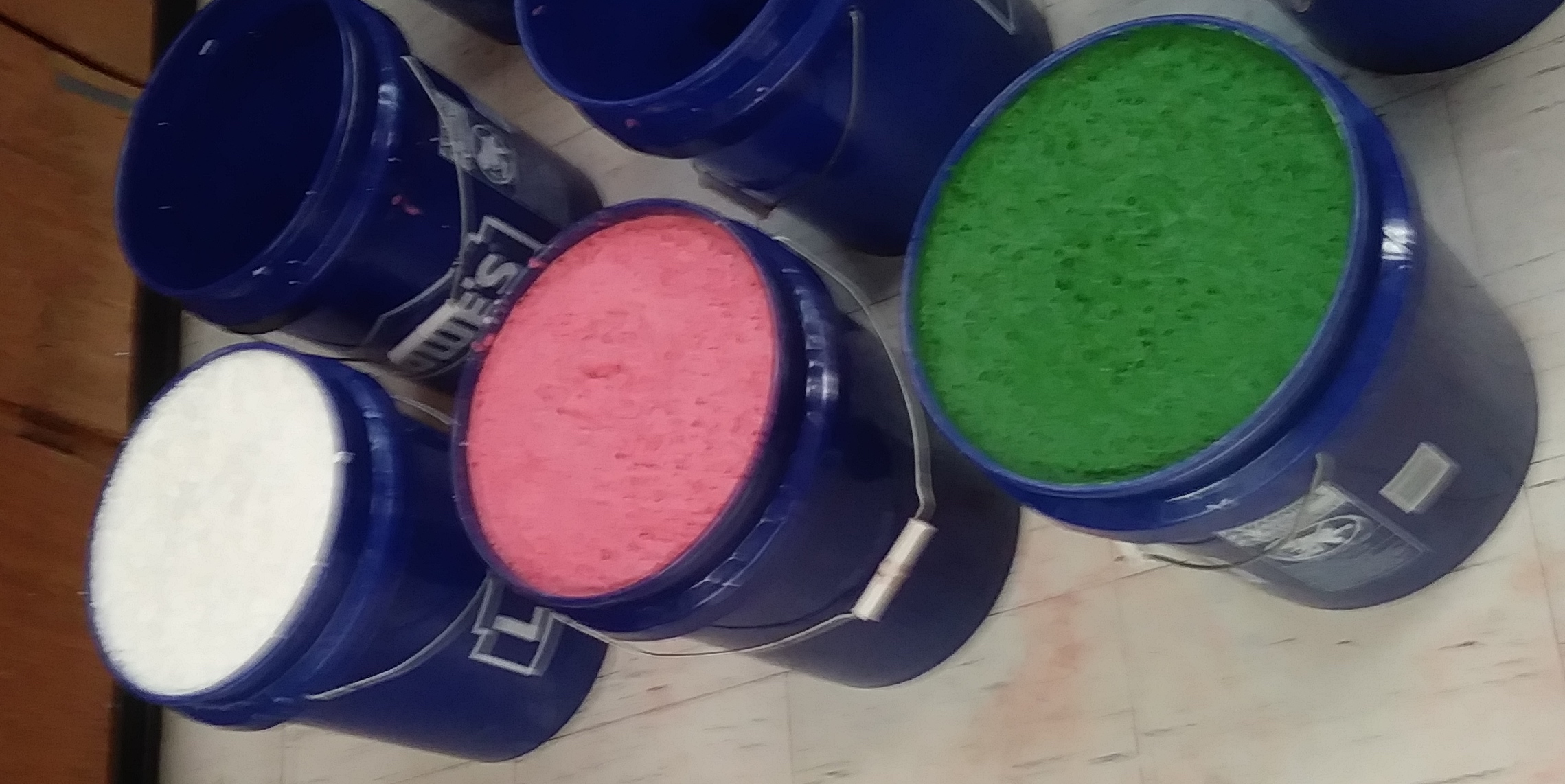
Kaolin particle films are having promising effects in managing Asian citrus psyllid, but they also have effects on photosynthesis. To help dig into this, a new member has joined our lab: Juanpablo Salvatierra Miranda, or “JP.” He’s 4 months into his first round of experiments, and he’s already made some important observations. He’s focusing on the how photosynthesis changes over the course of a day – “diurnal photosynthetic dynamics” – in response to kaolin particle films of different colors.
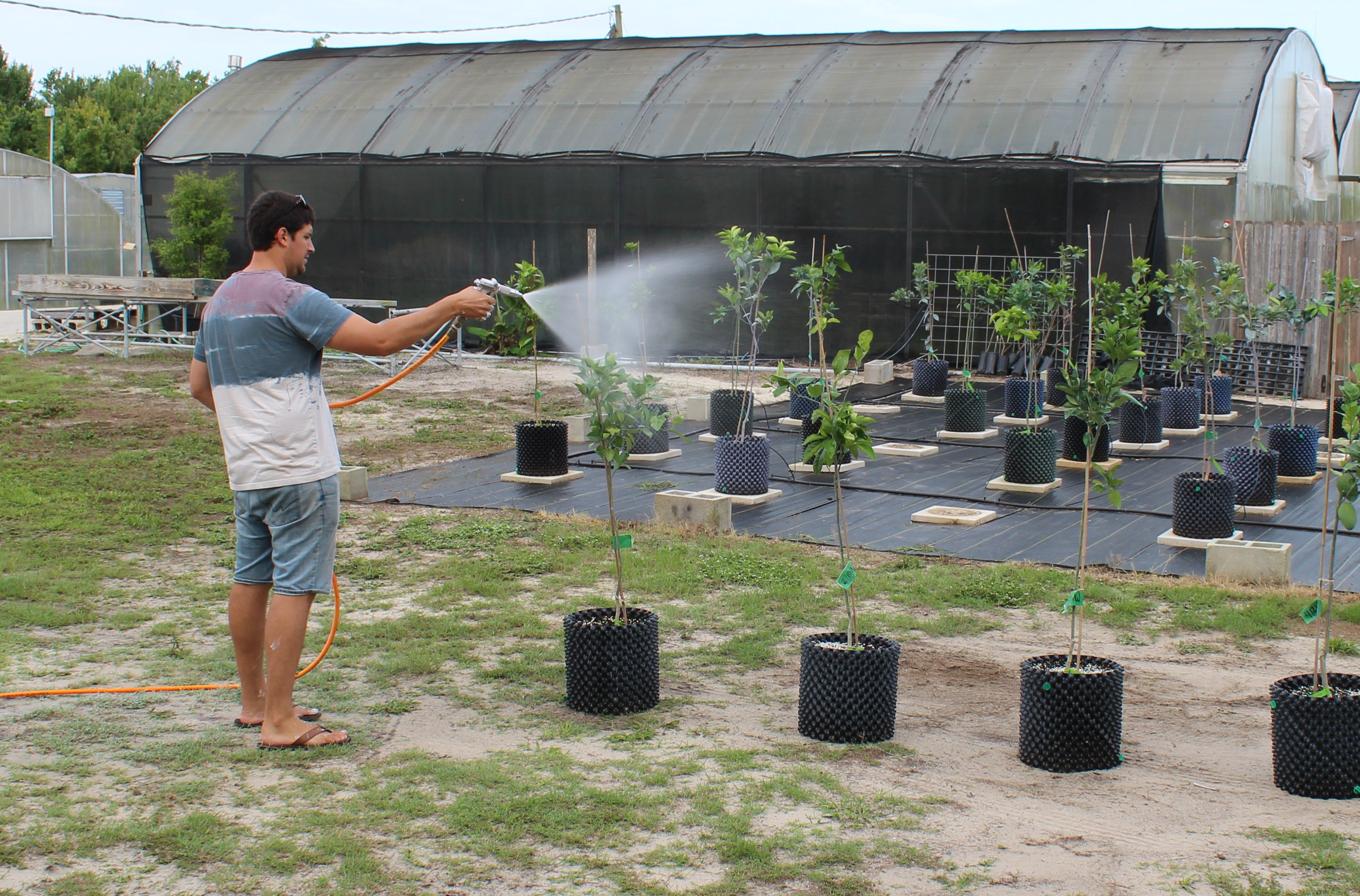
JP comes most recently from his native Chile, where he was working for a private agricultural research company. He has experience in horticulture of vegetables, wine grape, and citrus. His Master’s thesis will consider how different colored films affect growth and photosynthesis, as well as how these affect the development of huanglongbing symptoms in the field.
 Citrus Tree Physiology Lab