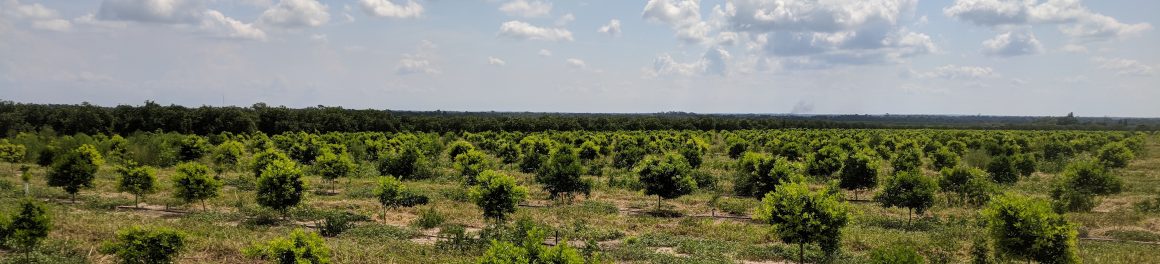
This project from the UF/IFAS Citrus Research and Education Center (CREC) is surveying citrus groves across the state to see how quickly the trees recover from Hurricane Ian. Our last blog post discussed how trees damaged from the hurricane are reacting as the weather warms. This newsletter discusses gibberellic acid (GA) as a hurricane mitigation strategy.
Citrus growers in Florida have faced significant challenges due to the devastating impact of Huanglongbing (HLB), a bacterial disease that has greatly affected orange production. Among the affected citrus varieties, ‘Hamlin’ oranges have been particularly vulnerable to HLB. Additionally, the state’s extreme weather conditions, including hurricanes, further exacerbate the losses and damage caused by HLB. However, recent research has shed light on gibberellic acid (GA) applications as a promising solution that can help rejuvenate ‘Hamlin’ groves and improve their resilience. The hope is that it can also bolster ‘Hamlin’ orange production and mitigate HLB-induced losses.
Results from field trials conducted in Polk and Hardee counties revealed that GA-treated ‘Hamlin’ trees exhibited higher fruit yield compared to untreated trees. In the first year of the trials, GA-treated trees showcased significantly less fruit drop, mitigating the losses associated with HLB. This is a crucial finding as pre-harvest fruit drop is a major concern for growers battling HLB-induced symptoms.
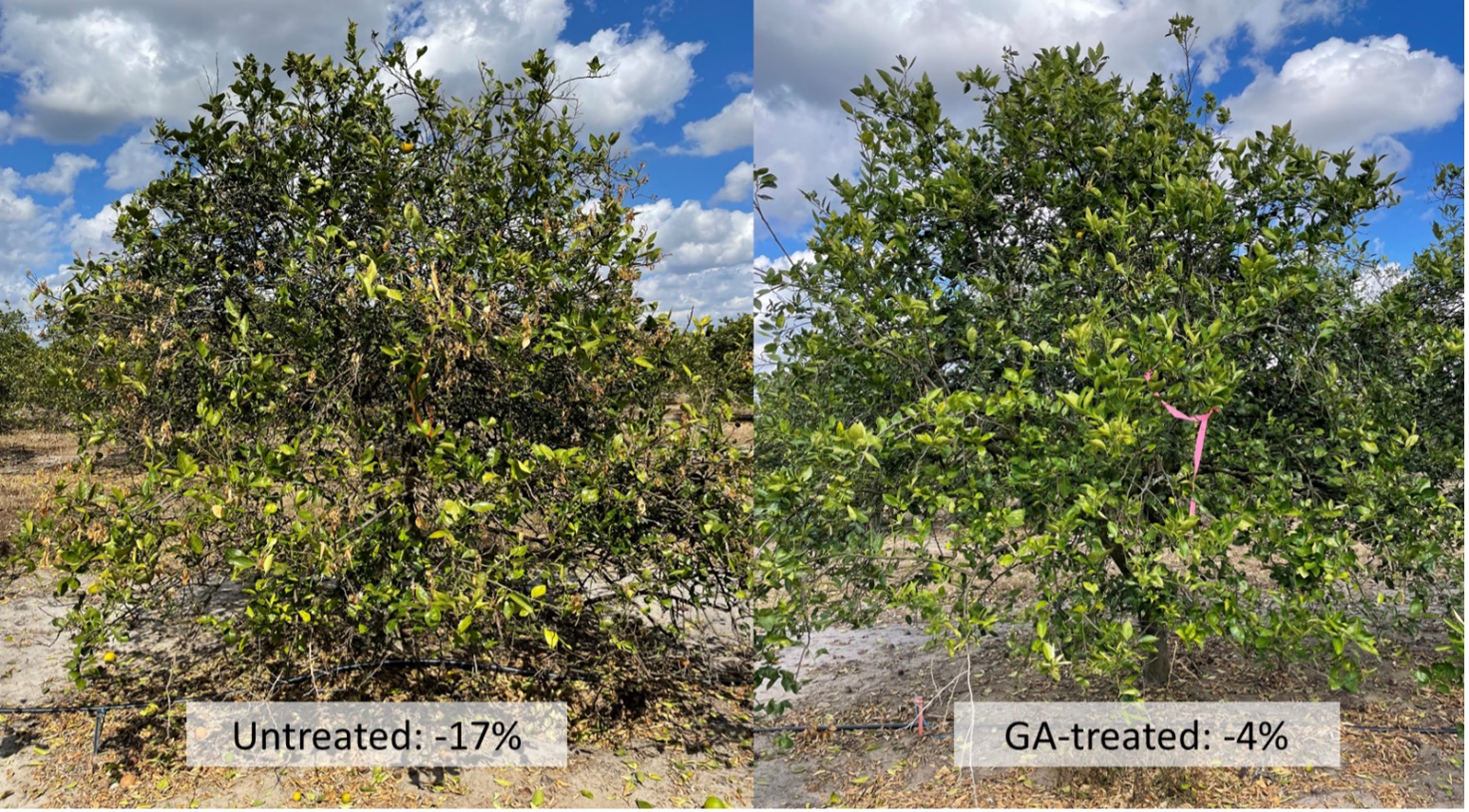
An untreated tree vs. a GA-treated tree.
Enhanced canopy density was a benefit of GA applications. The treated trees displayed better canopy health, as evidenced by higher light interception, which indicate denser canopies. This improvement is essential for photosynthesis and overall tree vitality. Even in the face of extreme weather conditions, GA-treated trees exhibited superior resilience.
The success of GA applications has given citrus growers more confidence in their Hamlin groves. Many have reported increased production and improved outlooks for their existing groves. GA is a viable and affordable solution to combating HLB and mitigating the adverse effects of extreme weather events.
For questions or more information, please contact project leader Christopher Vincent at civince@ufl.edu.
 Citrus Tree Physiology Lab