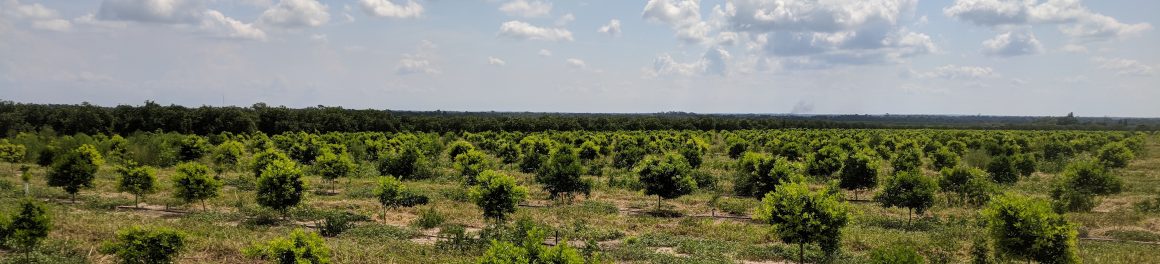
Kaolin Particle Growth

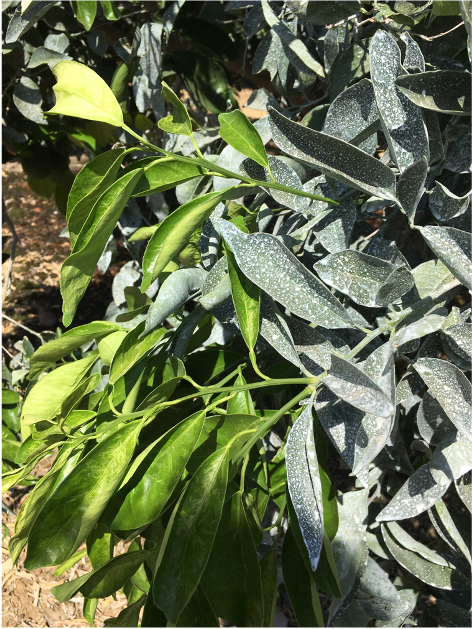
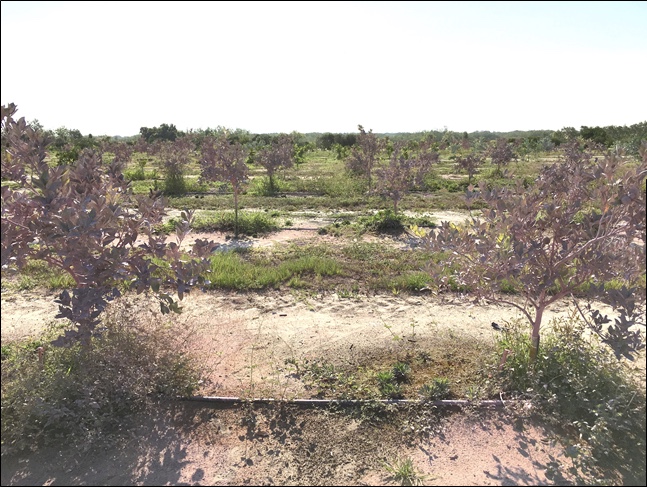
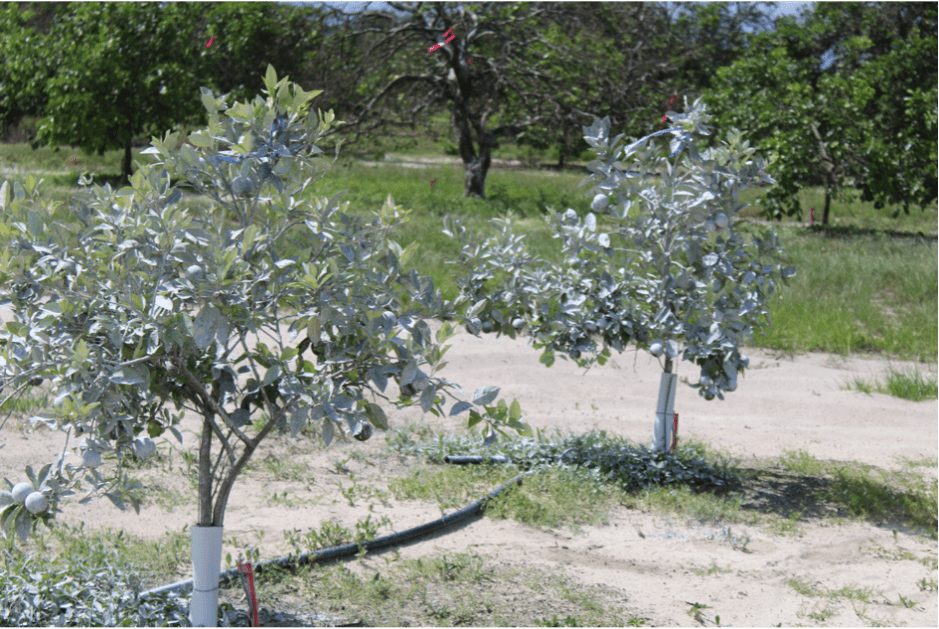
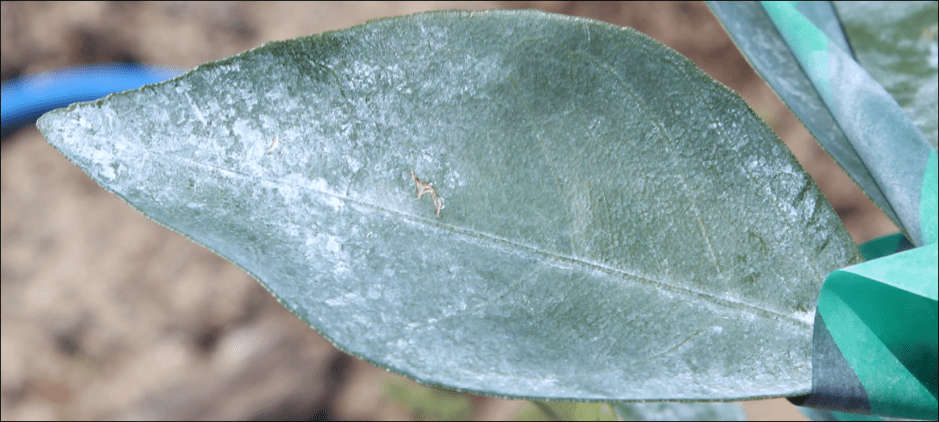
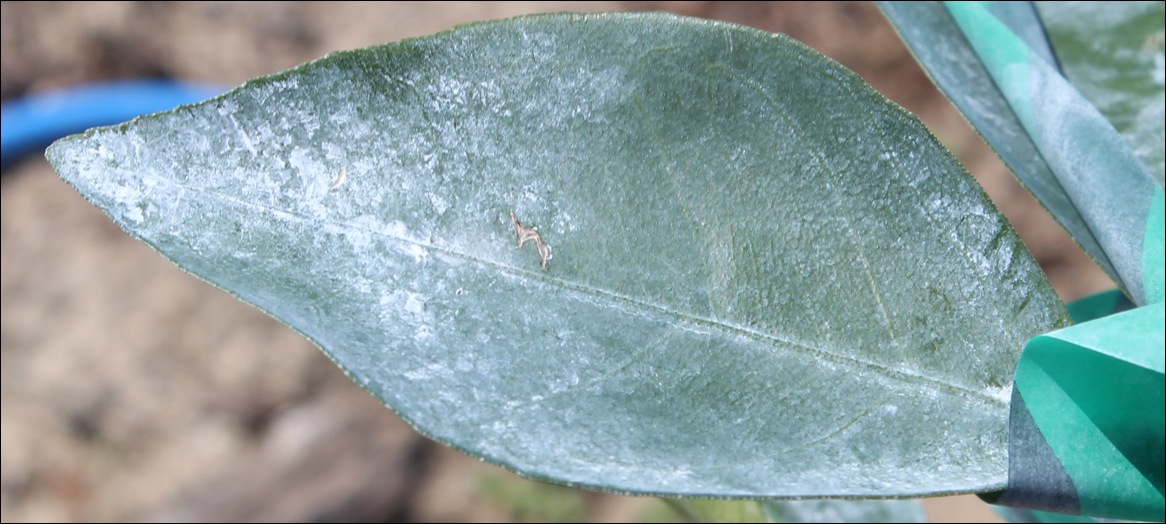
In our study kaolin particle films helped manage pests, and also improved tree growth. Kaolin particle films are a type of mineral that can be sprayed on plants to create a protective layer. Asian citrus psyllids, the pest that transmits citrus greening disease (HLB), are attracted to the natural color of leaves and the particle films cover this. White and red colored particle films were used in this study. Trees with white and red dye had a greater growth rate of trunk girth than controls, regardless of infection. This study found that particle films helped reduce the number of psyllids on leaves, as well as increased tree growth under HLB pressure.

HLB is the current largest threat to the Florida citrus industry; citrus production has declined, and citrus trees are nearly all infected. HLB stunts tree growth and limits yield, especially if infection occurs when the trees are still small. We studied for three years whether kaolin particle films on newly planted trees could help manage psyllids. We also tracked tree growth response to particle films and HLB. 
HLB reduces the growth rate of trees and negatively affects fruit yield and other quality characteristics. HLB cannot be cured once trees are infected so pest control is the usual course of action when it comes to preventing infection. HLB is spread when adult psyllids carry the bacterium from infected trees to uninfected trees. Kaolin particle films are a potential alternative to insecticides as a way to manage psyllids and the reduction in tree growth caused by HLB.

Increased growth in treated trees happened in spite of HLB infection. The positive impact of particle films on growth is likely due to shading, reducing photoinhibition, and light redistribution to lower canopy layers. Kaolin treatments increased growth enough that they made up for the loss in growth from infection. This is promising because it helps relieve pest pressure, while increasing growth of HLB affected trees.
Kaolin Particle Pest Management

Huanglongbing (HLB; “citrus greening disease”) is currently the biggest threat to the Florida citrus industry. HLB has caused declines in citrus production and has infected trees at a rate of 100%. Insecticides reduce Asian citrus psyllid, the pest that transmits HLB, but they don’t prevent more psyllids from moving into the planting, and they often kill the pest after transmission. This is why growers need non-insecticidal prevention options. One of these options is to apply kaolin particle films on trees to help manage psyllids.

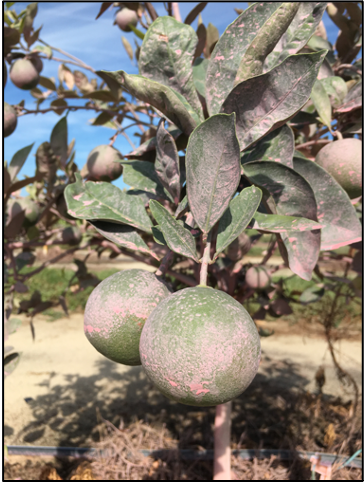
Kaolin particle films cover the natural color of the plants, which is what ACP are attracted to. White kaolin was already known to reduce ACP, but this study tested whether red kaolin may also help mitigate ACP. ACP are attracted to the blue and ultraviolet light in the leaves and red was thought to further reduce this. We made the kaolin red by taking naturally white kaolin and mixing in a dye and a binding agent, resulting in a pinkish color.  

This field study tested the effect red and white kaolin particles had on ACP pressure over the course of two years. The particles were added to the leaves of young non-bearing Hamlin trees. Another set of trees were treated with foliar insecticide and one control set received no treatments.

Overall, trees with red kaolin had the lowest number of ACP. Trees with white kaolin had less than the trees with foliar insecticide. The control trees had the most ACP. Important to note, none of the kaolin treatments completely prevented ACP from infecting trees but merely slowed the infection down. The onset was slower in red trees than white. These findings indicate that kaolin particle films may be an alternative pest management to foliar insecticides when it comes to reducing ACP and slowing HLB infection.

Managing Asian Citrus Psyllid and Citrus Growth Using Particle Films : Webinar Recording

Here Monique Rivera, entomologist at UC Riverside, and Christopher Vincent, physiologist at UF, discuss using particle films in citrus management. At some point I make a particularly effusive gesture, and smack my fancy microphone and lose sound for a minute. What can I say physiology is just too exciting to keep my hands down!

Sugar movement in long leaf pines: accepting their limitations to keep moving

Plants face many hurdles to keep water moving up and sugars moving down, while keeping photosynthesis churning. Add to these challenges the fact that some plants may create their own limitations with constricted phloem. Recent work by a number of labs, in which we played a small part, shows that some trees may have restrictions in phloem movement.

Long leaf pines are rare in nature. Only a handful of conifer species worldwide have leaves longer than about 4″ (10 cm). Longleaf pines, though, native to the southeastern U.S. have needles up to about 1 foot (30 cm)! Why are long leaf species so rare, and why are our pine’s needles so long?

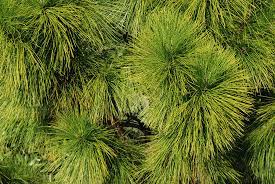
Longleaf pine (Pinus palustris) native to the Southeastern U.S.

The challenge of narrow pipes

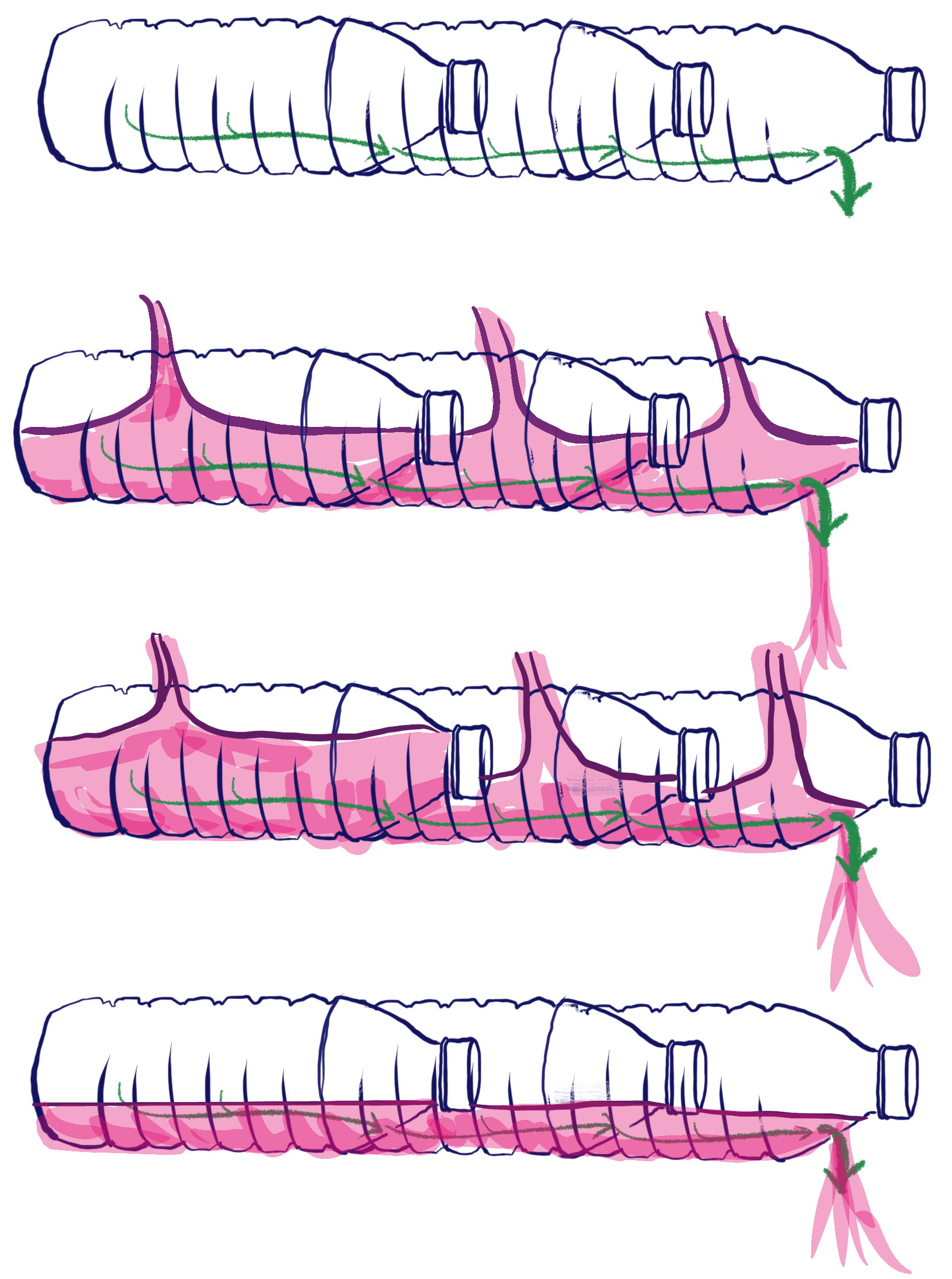
It turns out that most conifers, including longleaf pine (Pinus palustris), have narrow sets of phloem tubes that all the sugars from photosynthesis along the whole length have to move into in order to make it out of the leaf. This means that the leaf closer to the base is loading into the same narrow “pipes” that the tip is loading. Imagine if you took a bunch of bottles, lined them up and connected them with only small holes between them so that the each bottle drained into the next. Then you poured a liquid – imagine, say, pink lemonade, because that’s more fun – into all the bottles at the same time. The end bottle would drain the slowest, while the base bottle would drain fastest. The result is that, without some adaptation, the base and the tip compete for loading and the tip may be unable to add enough sugar to make the phloem flow. This may help explain why most species don’t have long needles. But that begs the question, how do longleaf pines do it?

A “bottle model” of how export is limited in long needles.

Longleaf pines accept their limitations

Longleaf pines have anatomical adaptations that help reduce the loading limitation in their needles. They have specific files of phloem tubes that load mostly from certain leaf segments, which helps reduce the competitive effect, but not eliminate it. Because of this, they accumulate starch in their tips during the day, while the base regions run the sugar export show. But at night the tips rev up, and begin to export as the base begins to run out of reserves. In this way the various regions alternate in export over time, and keep export going.

Are long needles the only place where phloem constricts transport?

This is the clearest case of phloem transport limitation so far, but there may be other species that have similar challenges. Which we will discuss in the near future.