Hurricane Ian Recovery Project Update 3

This project from the UF/IFAS Citrus Research and Education Center (CREC) is surveying citrus groves across the state to see how quickly the trees recover from Hurricane Ian. Our last update discussed the impact of Huanglongbing (HLB), a bacterial disease, on fruit production. HLB puts trees at a disadvantage health-wise and production-wise. This makes it even harder for them to recover after damage from events like hurricanes. This update discusses how trees are recovering over 10 months after the hurricane. Though the trees may look healthy this far out from the hurricane, they are still recovering and exhibiting signs of stress. 
 
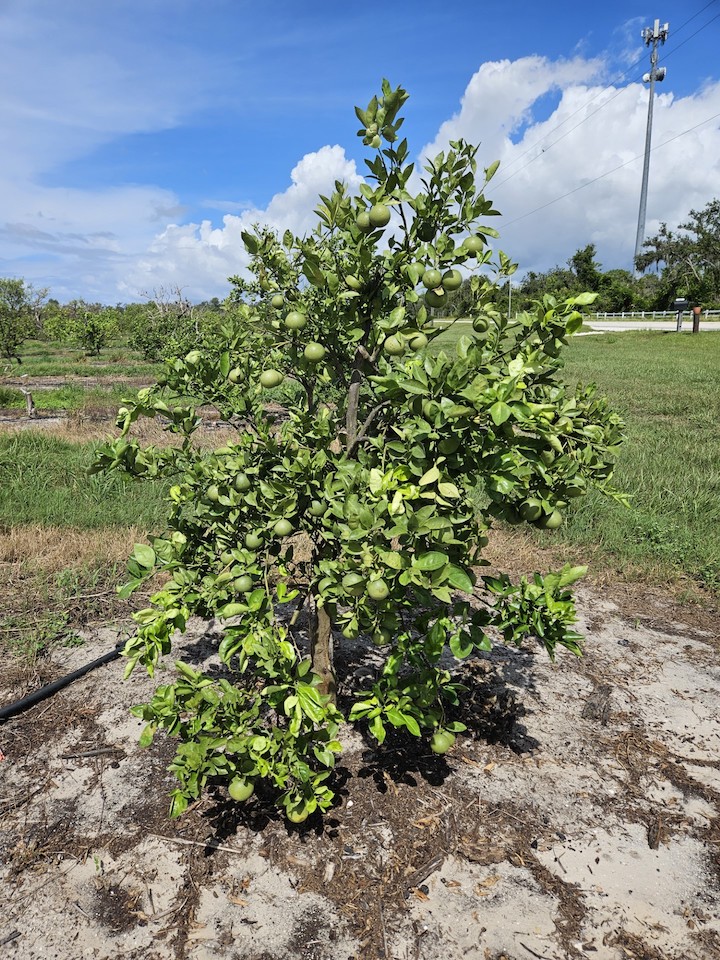
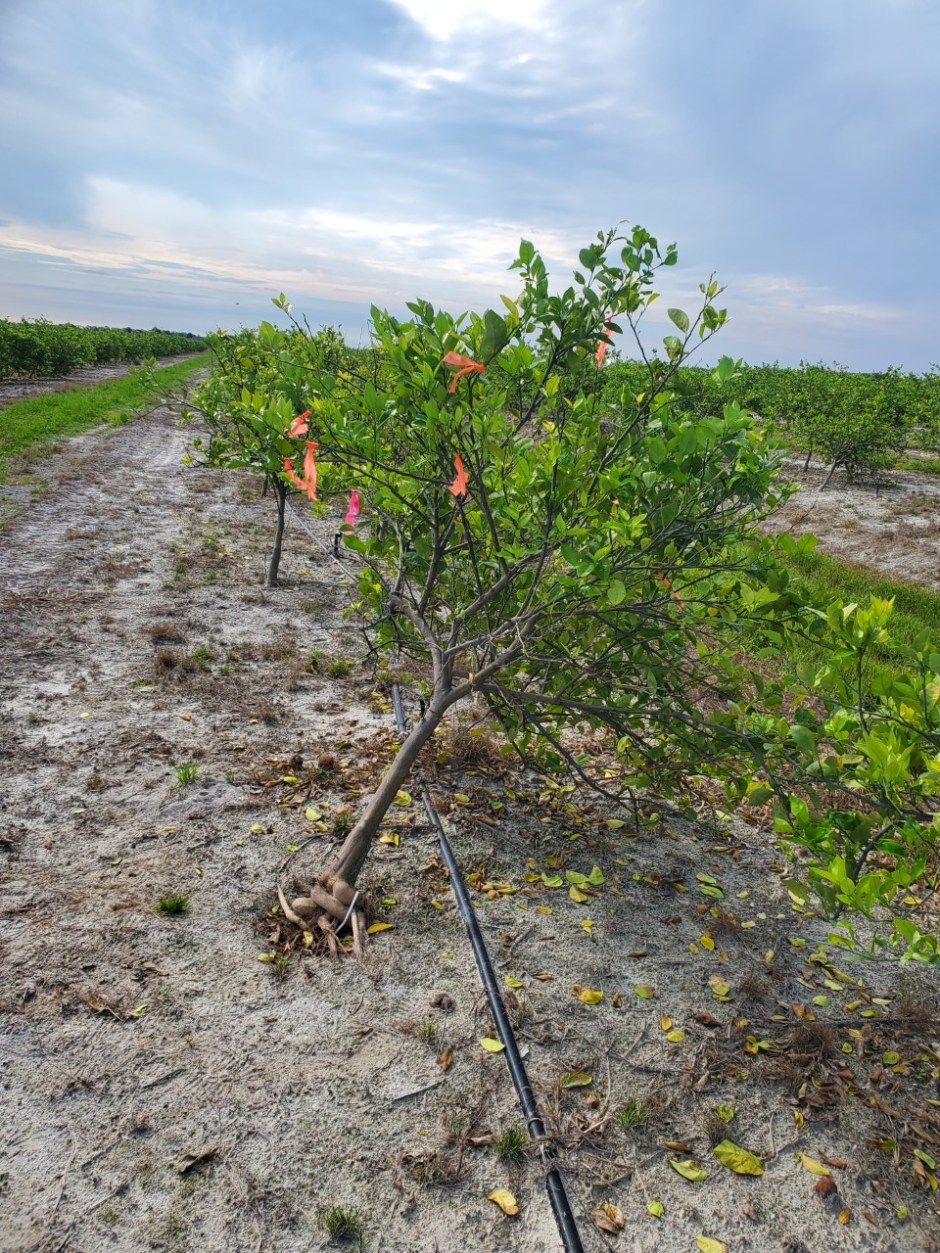
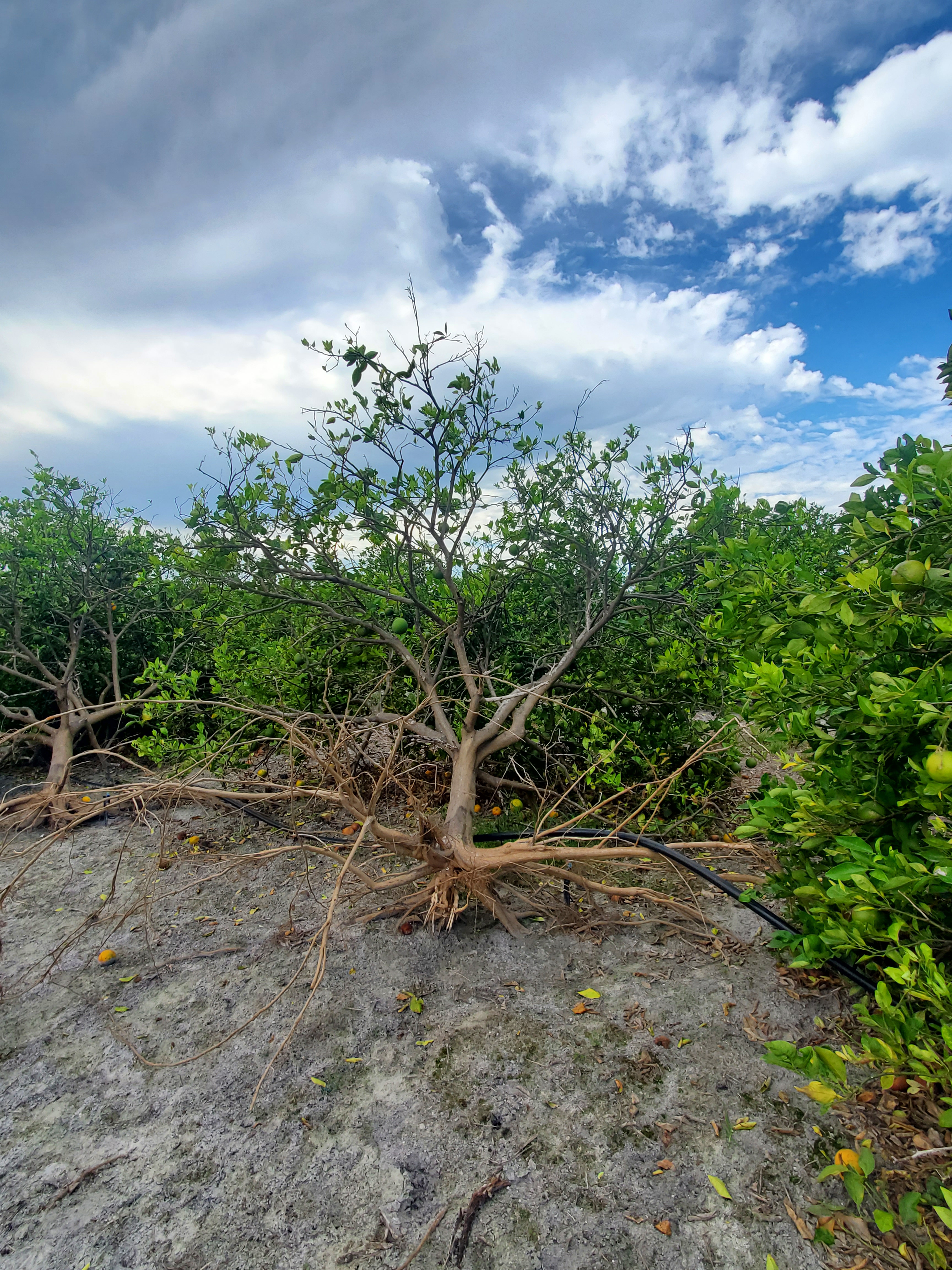
The windward side of a tree is the side that receives more pressure from wind. The leeward side faces away from the wind. The windward side of the trees affected by the hurricane are taking a longer time to recover than the leeward side. The damage these trees are exhibiting includes canopy loss, and bent and broken branches. Some trees are now at an angle because of the pressure from the wind.

A damaged tree in Punta Gorda in July 2023.
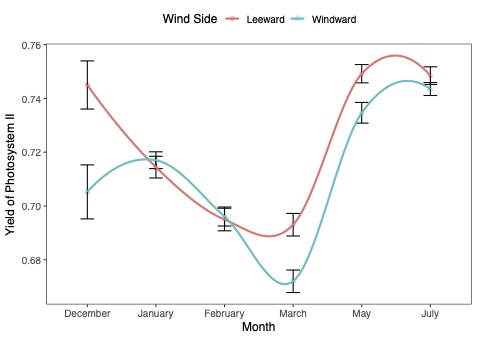
This graph looks at the effects of the wind on the canopy on the windward side versus the leeward side of the tree.

This figure shows how a measure of leaf health has changed in windward and leeward sides in the same trees since December. Higher values suggest that the trees are healthier and less stressed. Summer weather helped the trees recover, but leaves on branches that directly faced winds during Hurricane Ian have still not caught up with those facing away from the wind.   
The tree’s ability to transport water is at the heart of how hurricane winds impact citrus trees. Along with a lab in Gainesville, we examined how the intensity of the hurricane-affected the trees’ ability to move water through the stems (xylem functionality). The study looked at locations that had Categories 1 and 3 storms, as well as a site that avoided hurricane-force winds. The area with the weakest intensity had the greatest ability to move water. The area with Category 1 intensity had the worst xylem functionality. The damage at this site did not show immediately, as it had where the winds were Category 3. This helps explain observations by many growers that storm effects are not all immediately obvious. We suspect it is taking the trees so long to recover because spring was dry, making less water available to trees that have a hard time moving water from the soil to the leaves, so the trees have not been getting the moisture they need to support recovery.

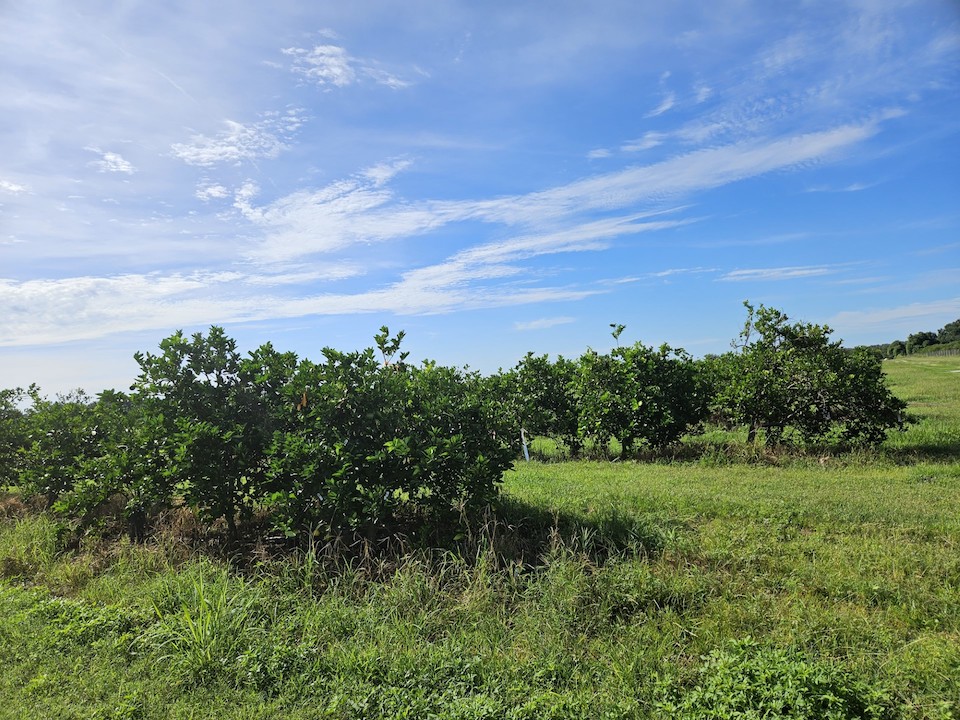
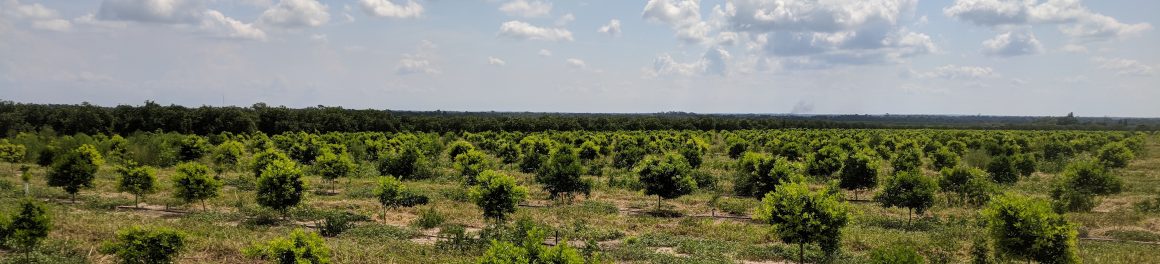
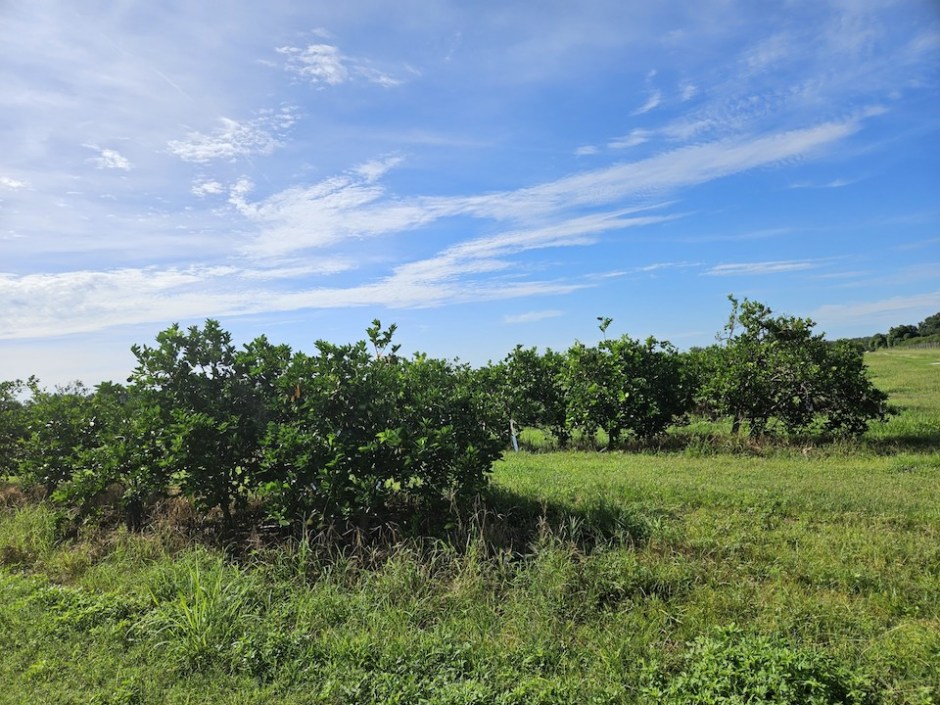
A grove in Zolfo Springs in July 2023.

For questions or more information, please contact project leader Christopher Vincent at civince@ufl.edu.

Hurricane Ian Recovery Project Update 2

This project from the UF/IFAS Citrus Research and Education Center (CREC) is surveying citrus groves across the state to see how quickly the trees recover from Hurricane Ian. Our last blog post discussed how trees damaged from the hurricane are reacting as the weather warms. This newsletter discusses gibberellic acid (GA) as a hurricane mitigation strategy. 

Citrus growers in Florida have faced significant challenges due to the devastating impact of Huanglongbing (HLB), a bacterial disease that has greatly affected orange production. Among the affected citrus varieties, ‘Hamlin’ oranges have been particularly vulnerable to HLB. Additionally, the state’s extreme weather conditions, including hurricanes, further exacerbate the losses and damage caused by HLB. However, recent research has shed light on gibberellic acid (GA) applications as a promising solution that can help rejuvenate ‘Hamlin’ groves and improve their resilience. The hope is that it can also bolster ‘Hamlin’ orange production and mitigate HLB-induced losses.

Results from field trials conducted in Polk and Hardee counties revealed that GA-treated ‘Hamlin’ trees exhibited higher fruit yield compared to untreated trees. In the first year of the trials, GA-treated trees showcased significantly less fruit drop, mitigating the losses associated with HLB. This is a crucial finding as pre-harvest fruit drop is a major concern for growers battling HLB-induced symptoms.

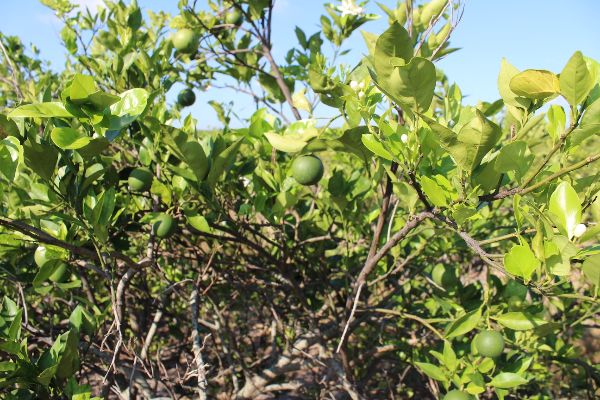
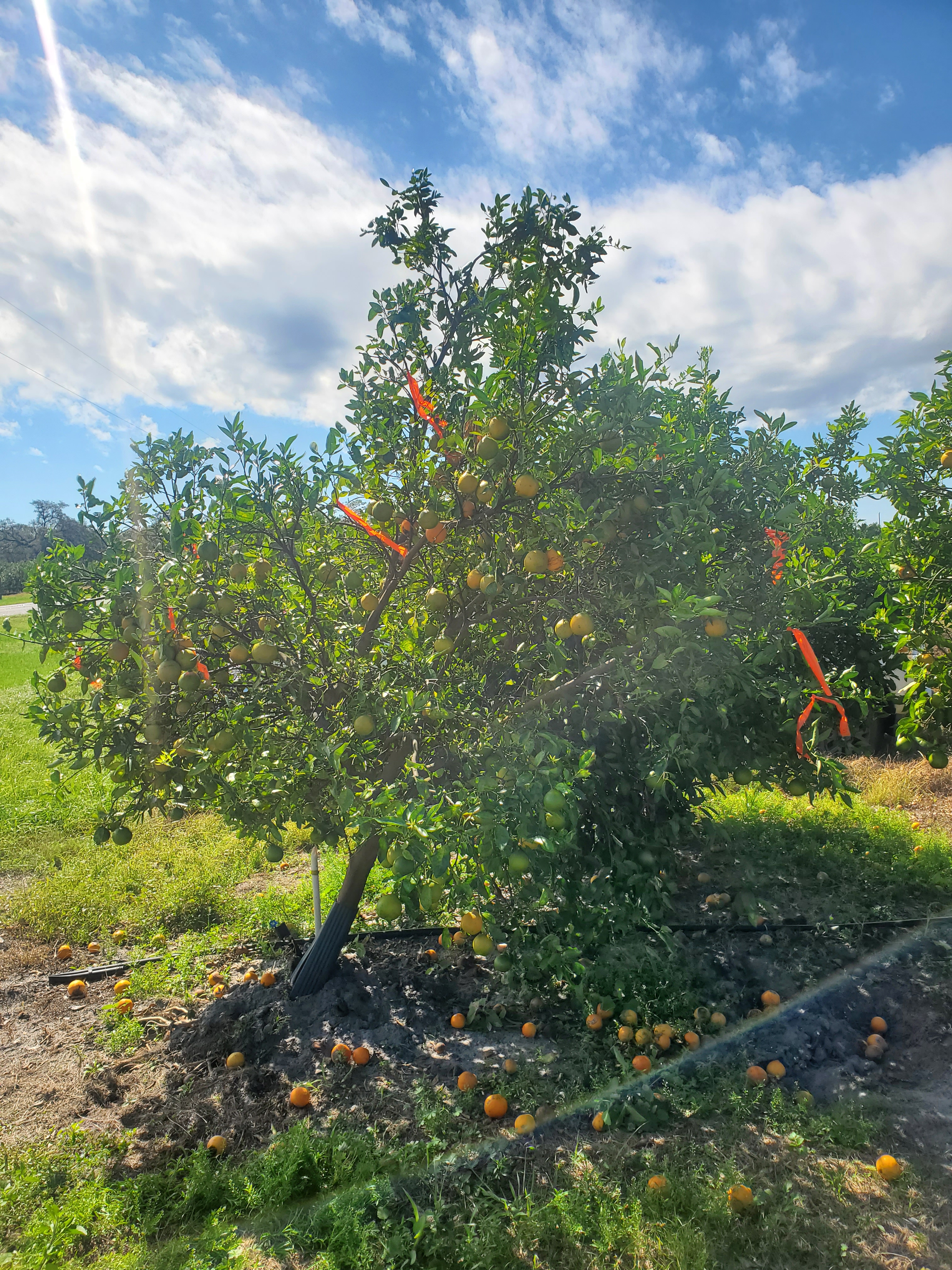
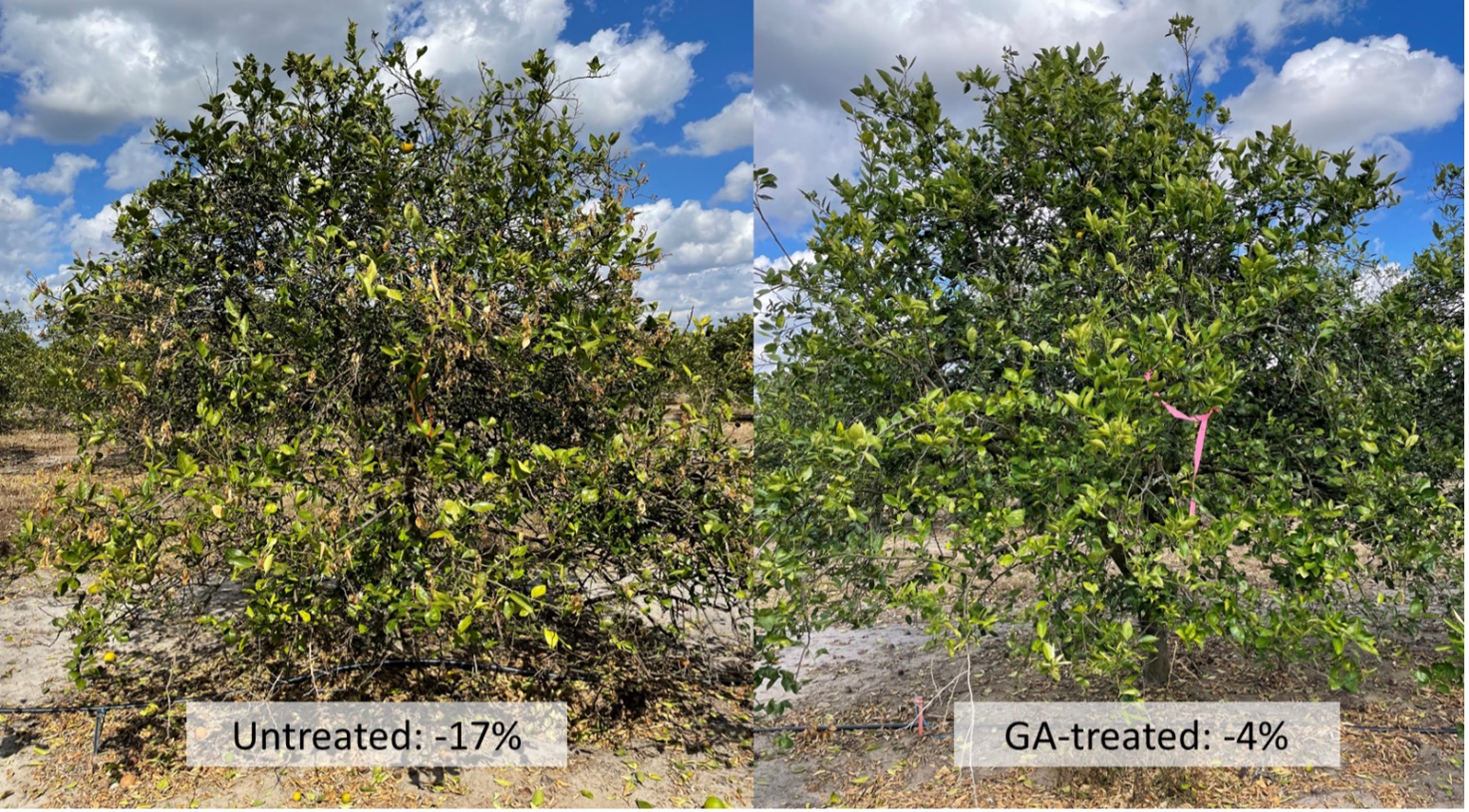
An untreated tree vs. a GA-treated tree.

Enhanced canopy density was a benefit of GA applications. The treated trees displayed better canopy health, as evidenced by higher light interception, which indicate denser canopies. This improvement is essential for photosynthesis and overall tree vitality. Even in the face of extreme weather conditions, GA-treated trees exhibited superior resilience. 

The success of GA applications has given citrus growers more confidence in their Hamlin groves. Many have reported increased production and improved outlooks for their existing groves. GA is a viable and affordable solution to combating HLB and mitigating the adverse effects of extreme weather events.

For questions or more information, please contact project leader Christopher Vincent at civince@ufl.edu.

Hurricane Ian Recovery Project Update 1

Welcome back to the Hurricane Ian Recovery Project!

This project from the UF/IFAS Citrus Research and Education Center (CREC) is surveying citrus groves across the state to see how quickly the trees recover from Hurricane Ian. Our last blog post introduced the project and how we hope the results of the surveys will help growers better understand the medium-term impacts of hurricane damage on their groves to better protect them.

Hurricane Ian in 2022 caused significant damage to Florida citrus groves. Even groves that experienced only Category 1 winds have begun to decline as the weather has warmed. Trees in Florida citrus groves are exhibiting signs of canopy decline that include branch dieback and leaf drop. Branches with new growth are also experiencing leaf drop. These observations suggest that the trees are under significant stress. Our measures of photosynthetic efficiency also show declines in the health of the remaining leaves. Photosynthetic efficiency has decreased in trees from January to March of this year, indicating that the leaves are stressed.

Damage from Hurricane Ian is still affecting tree health. Field observations show that the hurricane caused mechanical damage to plant limbs, which could have impacted the vascular system. The vascular system is responsible for transporting water from the soil to the leaves. Leaves get a low water supply without proper water transport from the soil to the leaves.

Hurricane Ian’s damage is further leveraged by warming temperatures, which will increase in the coming months. High temperatures cause stress to the leaves. As the weather warms, the production of reactive oxygen species in the photosynthetic system can increase, which damages the photosynthetic machinery of the plant and decreases leaf health. High temperatures can also cause stomata closure, which reduces CO2 intake for photosynthesis. This leads to photoinhibition, which intensifies when the weather warms up.

A sweet orange tree from western Polk Co. showing dieback very advanced fruit, and off-season bloom.

Low water supply also contributes to declining leaf health. When leaves have a low water supply and aren’t getting enough water, photosynthesis decreases and affects leaf health. The electron transport chain in photosynthesis requires a constant supply of electrons from water. When water availability is limited, the supply of electrons is also limited, leading to a decrease in leaf health. A low water supply can also cause a reduced transpiration rate. This increases leaf temperature, which also decreases leaf health.
 
Reducing stress is an integrated approach to enhancing leaf health. If trees can reduce their temperatures and get more water, they will have less stress and improved leaf health and growth. Maintaining appropriate soil moisture is one approach to reducing stress. One way to do this is more frequent irrigation. This would involve keeping irrigation volume the same but watering the tree in frequent small doses. This ensures sufficient water availability to plants. Another approach is to reduce leaf temperature and water loss. Kaolin particle films are one way to reduce leaf temperature. It reflects some of the sunlight, which helps cool the leaves and reduce photoinhibition by shading them. This allows leaves to utilize light energy efficiently, even when they have a low water supply. When leaves are not overheated, they can better use light energy for photosynthesis, and avoid stress. Kaolin clay can also help reduce water loss from leaves by shading and cooling them, reducing the temperature and light factors that reduce leaf health. Maintaining water can further improve the plant’s ability to photosynthesize and maintain good leaf health. 
 
For questions or more information, please contact project leader Christopher Vincent at civince@ufl.edu.

Welcome to the Hurricane Recovery Project!

This project from the Citrus Research and Education Center (CREC) will survey citrus groves across the state to assess Hurricane Ian’s impact and how quickly the trees recover from it. We hope the results of these surveys will help you better understand the medium-term impacts of hurricanes based on windspeeds. Other goals for the project include equipping you with knowledge to develop plantings that are more resilient against storms. We hope this information can help with recovery, both now and in the future. Overall, we hope this knowledge will be applicable and useful for growers to protect their groves from storm damage. To do this we will be surveying your groves monthly to measure over time the impact of Hurricane Ian.

A hurricane damaged tree and a tree involved in the study. 

This is the first update that will summarize the results of the surveys and share their potential application for grower practices. Results will eventually be published in Citrus Industry Magazine as well. An EDIS document for grower use will also be published in late 2023 outlining how to make plantings more resilient, recover from wind damage, and predict the severity of the damage on their groves based on the storm.
 
For questions or more information, please contact project leader Christopher Vincent at civince@ufl.edu.
 
We are excited to share our results with you over the next year. Please share this blog with anyone who also might find this information pertinent!